Research
Working papers
Cloudy with a Chance of Laziness
Long-Lasting Effects on Voting from the First Federal Election in Eastern Germany with Valentin Lindlacher
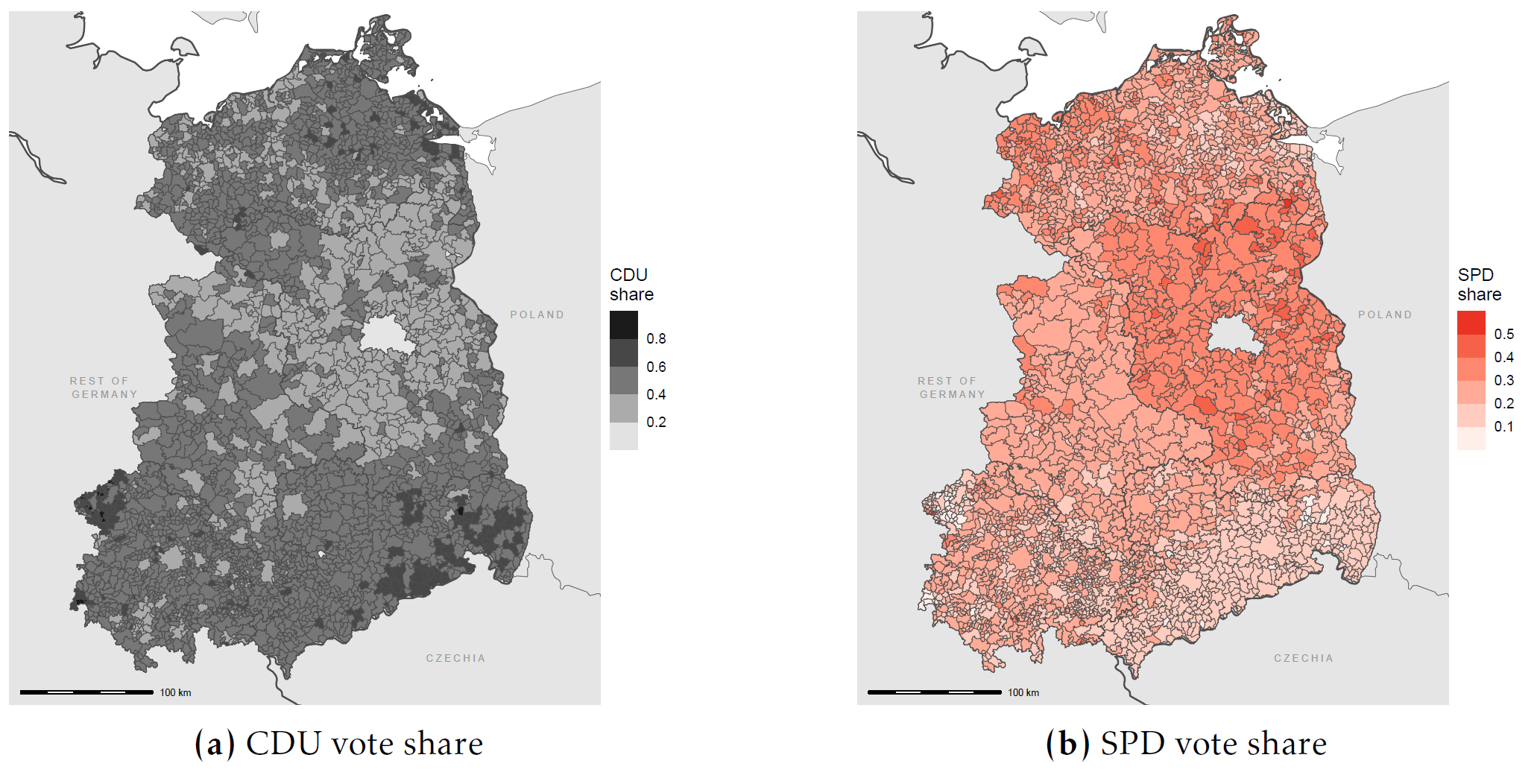
We investigate the long-run effects of early democratic participation on subsequent voting behavior, focusing on Eastern Germany’s first federal election after reunification in 1990. With a weather IV, we find that first-time electoral choices affect party support in the long term. A higher municipal vote share for the quasi-incumbent party CDU in the initial election in 1990, caused by weather conditions, leads to systematically higher CDU vote shares in subsequent elections. Unlike studies of established democracies, our setting rules out path dependence, since this was the first Bundestag election for the entire East German electorate. This suggests that early election choices can set individuals on a path of sustained party support, consistent with theories of habit formation and the accumulation of expressive benefits from voting. The findings underscore the formative power of early democratic experiences: Context-specific shocks can leave lasting imprints on political behavior, particularly in societies undergoing institutional transformation.
Work in progress
Ethnic Dimensions of Trade
The Impact of Oil Prices on Sub-Saharan African Development with Ronja Huhn, Christian Leßmann, and Kyra Riederer
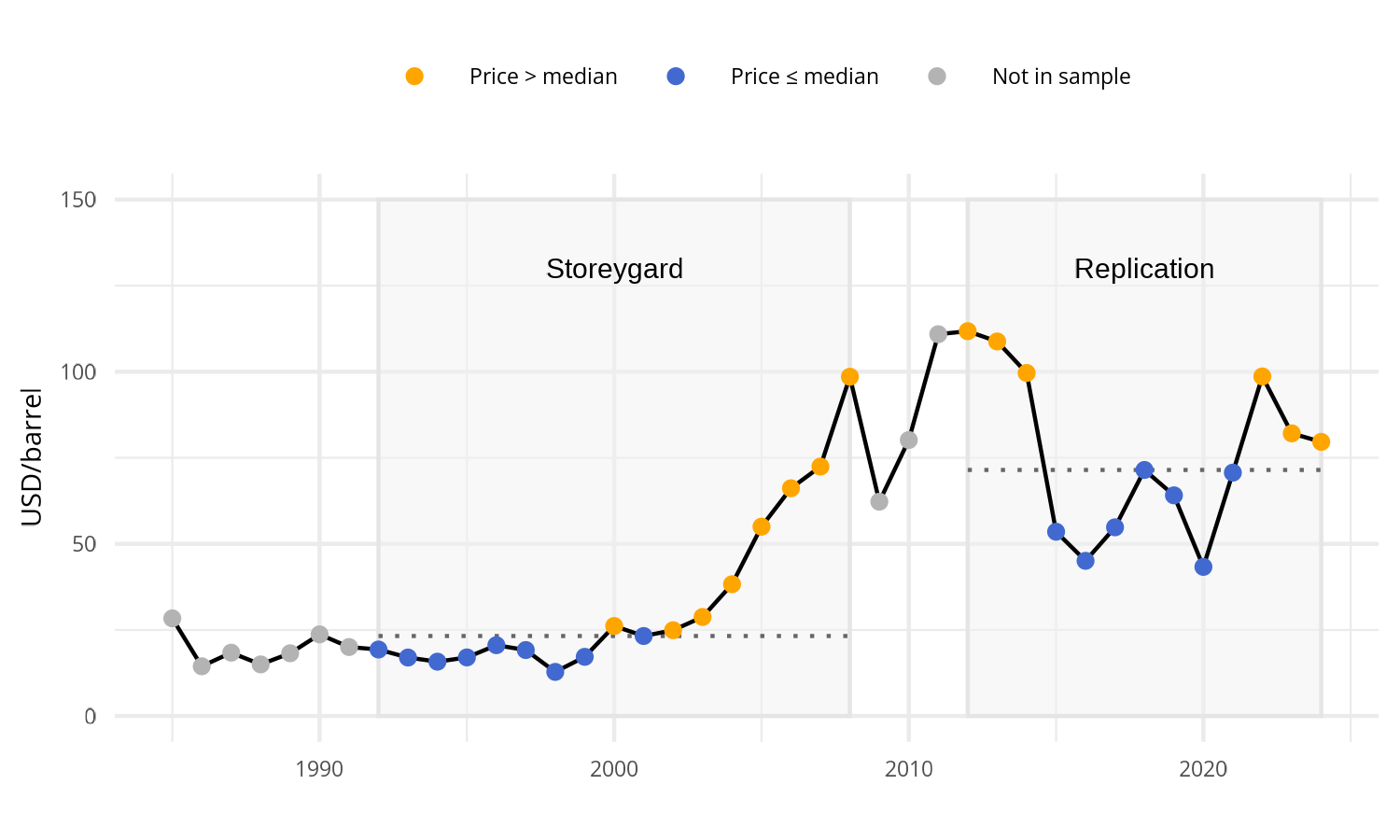
This paper examines how oil-price induced changes in transport costs reshape the spatial distribution of economic activity in Sub-Saharan Africa (SSA). We build on Storeygard (2016), who shows that higher oil prices dampen growth in cities farther from ports due to rising transport costs, and study redistribution across space. Our central question is: Which locations gain, and which lose, when trade costs change? We show that oil price shocks generate systematic reallocation effects. Cities relatively close to ports—but outside the immediate port hinterland—benefit disproportionately, while remote areas experience relative decline. In addition to road distance, we explore ethnic distance as an alternative measure of trade costs. We highlight spatial winners and losers of trade redistribution. Oil price shocks thus function as a redistribution mechanism and shape patterns of regional inequality within countries.
When Waste Becomes Wealth
The Spillover of China’s Waste Ban to African Landfills with Christian Leßmann
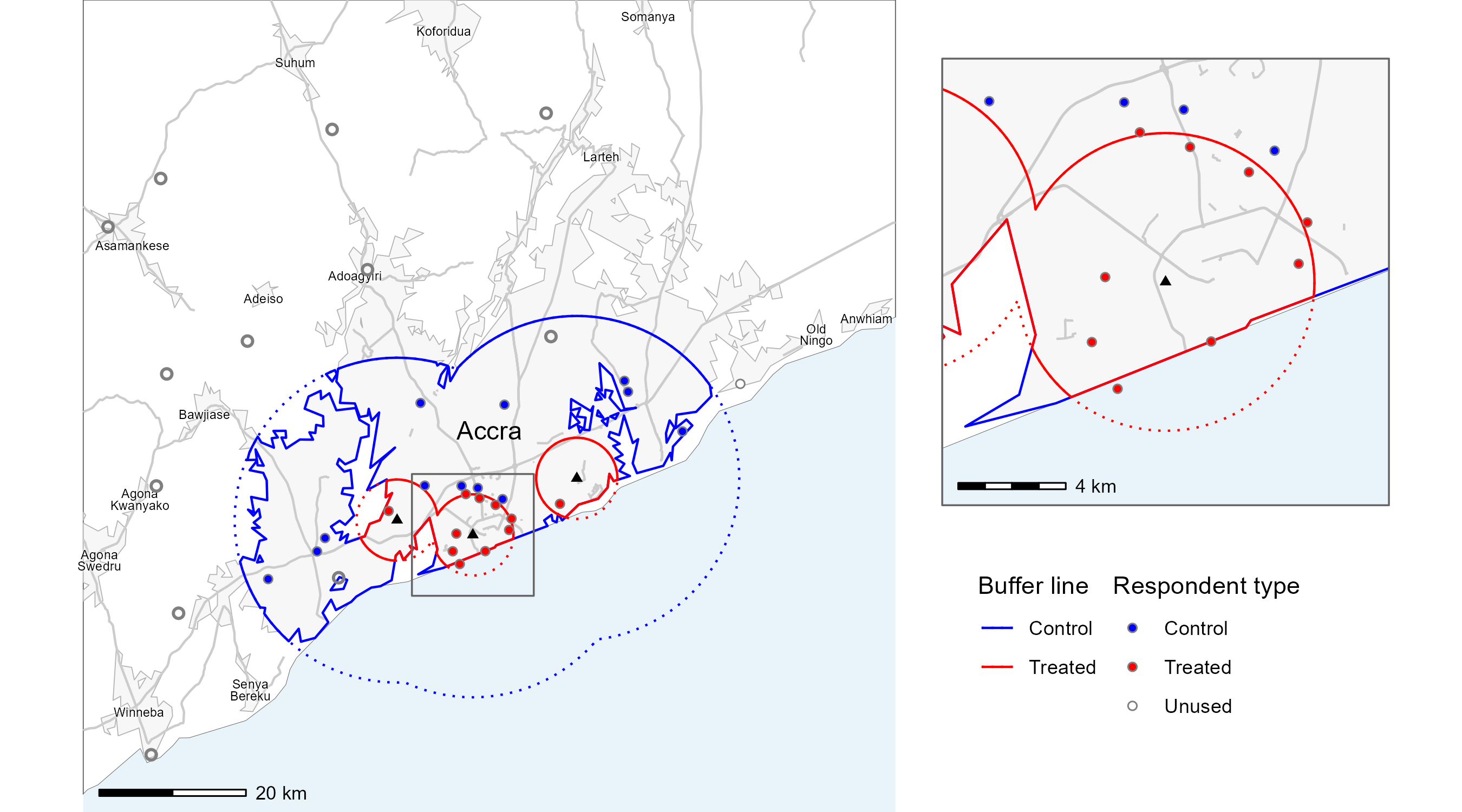
Rapid urbanization in Sub-Saharan Africa has expanded both the population and the volume of waste, much of which ends up in landfills. These sites simultaneously provide rare income opportunities for the urban poor and expose nearby residents to health risks. We causally study how landfills affect local development in terms of wealth and health by exploiting China’s 2018 , which banned the import of 24 waste categories. The resulting redirection of waste exports increased the value of landfills in African port cities but left hinterland cities unaffected. Using a triple-difference design and novel hand-collected data on landfills in Ghana and Kenya, linked to DHS microdata, we show that landfill-value increases improve household wealth, moving households up the national wealth distribution, and raise access to antenatal care. We find no detectable effect on child health. Our results highlight the dual role of landfills as extractive sites: they increase wealth and improve access to health services through informal recycling markets, yet they do not mitigate underlying health hazards.
Publications
A Comment on “Information and Spillovers from Targeting Policy in Peru’s Anchoveta Fishery”
with Marta Bernardi and Rebecca Rotich (2024, I4R Discussion Paper Series No. 156)
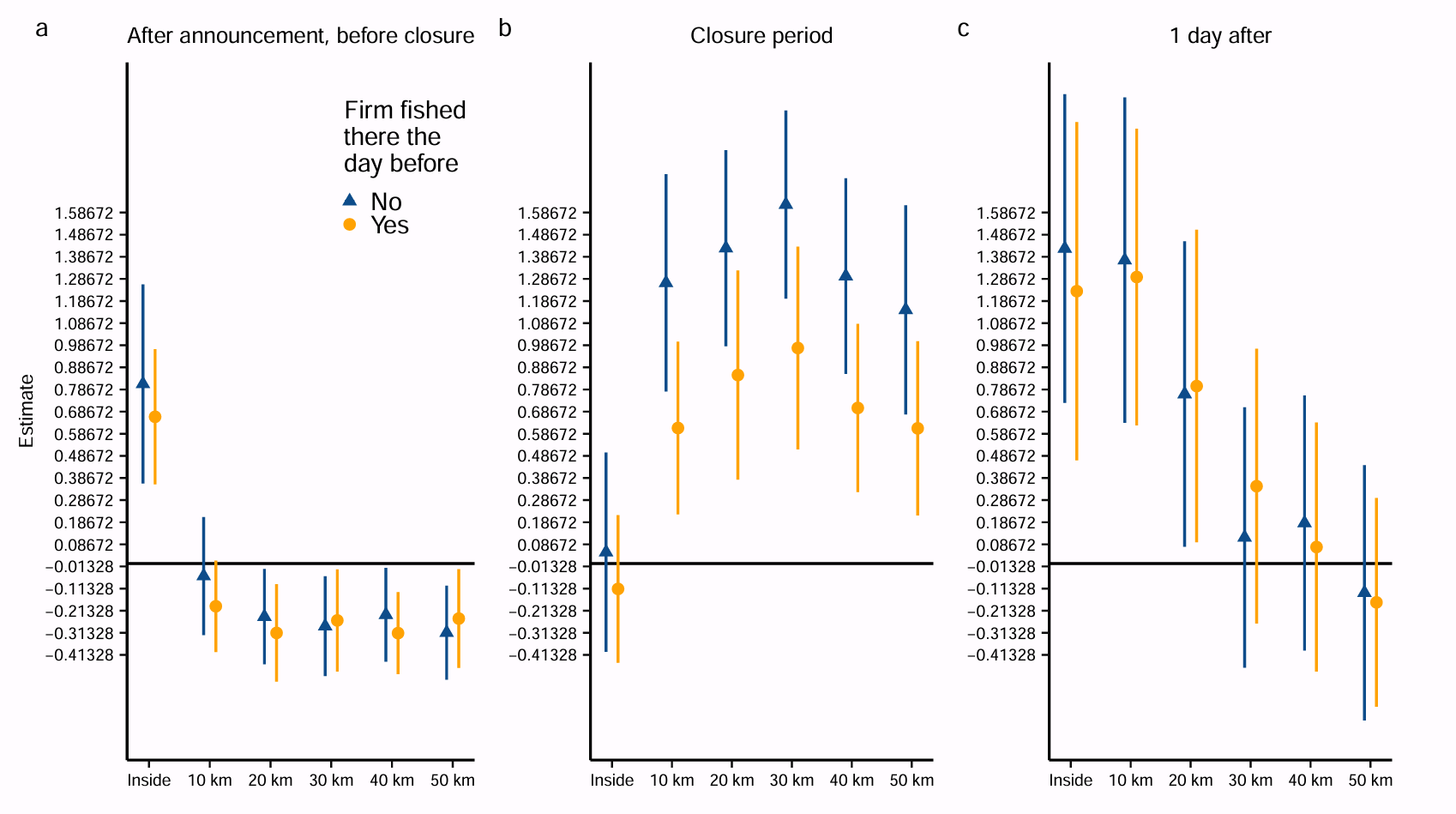
The study provides empirical evidence that a targeted policy can backfire because information signals affect non-targeted units. Specifically, the analysis of the policy aimed at regulating the harvesting of juvenile fish in Peru’s Anchovy Fishery, by temporarily closing areas with high juvenile catch percentages, reveals an unintended increase of 48% in the overall seasonal juvenile catch percentage. This appears to be due to substantial spatial and temporal spillovers generated by the policy that reduces search costs for fishers. The study combines administrative micro-data used by the regulator to generate closures with biologically richer data from fishing firms. All results are easily computationally reproducible within a 5-hour time frame, except for the synthetic controls robustness check, which takes a considerable amount of time (appr. 64 hours) but works. We stress the robustness and reproducibility of the study by testing whether the analysis is robust to the use of different types of standard errors, and the findings appear unaffected. Overall, the full analysis and graphic outputs of the paper are reproducible using the publicly available complementary data and code from the AEJ website despite minor code interpretability challenges.
Economic Advantages of Community Currencies
(2020, Journal of Risk and Financial Management)
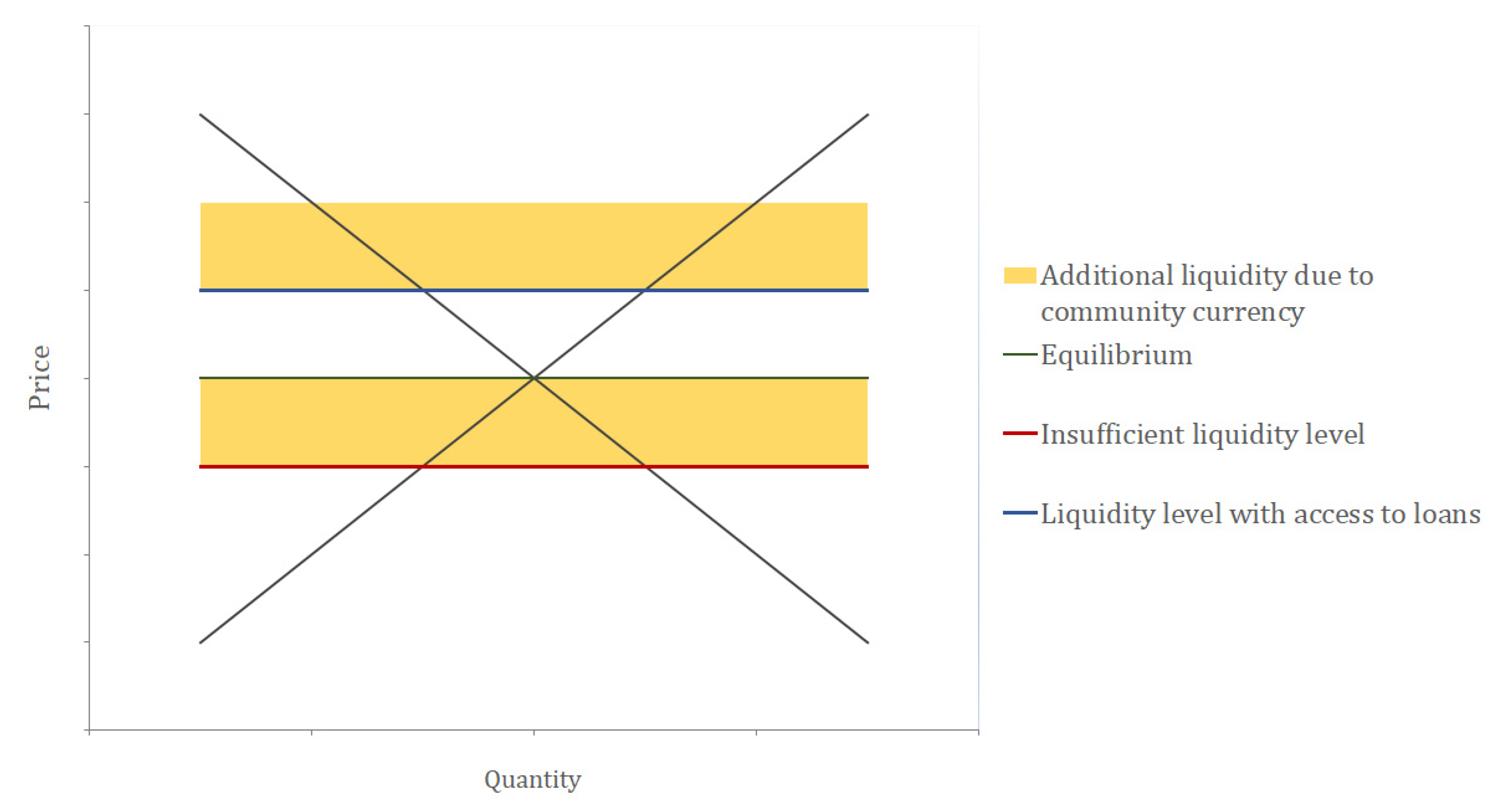
Community currencies are only sometimes economically advantageous. We focus on seasonal changes in money upply and assume that community currencies stabilize the money supply in a local community. This leads to additional transactions during seasons of insufficient supply of national currency. We hypothesize community currencies are therefore economically advantageous in a surrounding of seasonally insufficient money supply. We test the hypothesis qualitatively with two case studies, the German Chiemgauer and the Kenyan Sarafu Credit. We find community currencies are only economically advantageous in an environment of insufficient liquidity.